Why New Construction Concrete Slabs Matter More Than You Think
Purchasing a new construction home in Elgin is an exciting milestone. However, many first-time homebuyers overlook one of the most critical components of their investment: the concrete slab foundation and garage slab. Unlike older homes where foundation issues develop gradually over decades, new construction concrete slabs set the tone for your home's long-term durability and resale value. A poorly installed or improperly finished slab can lead to costly repairs down the road, affecting everything from your garage floor to your basement.
The concrete slab is not just about aesthetics. It's the literal foundation that supports your entire home. Builders in Elgin and surrounding areas are required to meet specific building codes, but meeting code is the bare minimum. Understanding what a quality slab looks like and knowing what questions to ask your builder before closing can save you thousands in repairs and give you peace of mind that your new home is built to last.
What to Inspect: The New Home Garage Slab Checklist
Your garage slab is one of the most visible and heavily used concrete surfaces in your new home. It endures vehicle weight, temperature fluctuations, salt exposure during winter months, and potential moisture intrusion. Before you close on your new construction home, conduct a thorough inspection of the garage slab. Start by walking the entire surface and looking for visible cracks, settling, or uneven areas. Small hairline cracks are often normal as concrete cures, but larger cracks wider than 1/8 inch or cracks that are actively spreading warrant closer attention and possibly a call to a concrete professional.
Check the slab for proper slope and drainage. Your garage slab should slope slightly away from the garage door and toward the driveway to prevent water from pooling inside. If water collects in certain areas or if you notice staining that suggests moisture has been sitting, this is a red flag. Additionally, examine the edges where the slab meets the foundation walls. Gaps or separation here can allow water infiltration, which leads to mold, efflorescence (white powder deposits), and structural concerns. Finally, walk the perimeter and look at how the slab transitions to any exterior Concrete Driveways or walkways. Poor transitions can trap water and accelerate deterioration.
Builder Slab Inspection Illinois: What Builders Are Required to Do
Illinois has specific building codes and standards that new construction must meet, but understanding these requirements helps you know what to expect and what questions to ask. Under Illinois Building Code, concrete slabs must be properly reinforced, installed on suitable base materials, and finished to appropriate tolerances. The builder should provide documentation showing that the concrete mix design meets specifications, that proper curing time was observed, and that any necessary vapor barriers were installed beneath the slab to prevent moisture from wicking up into your home.
Before closing, request a copy of the concrete inspection reports and any testing documentation from your builder. Ask your builder or their representative to walk you through the slab installation process, including what base materials were used, whether a vapor barrier was installed, and how long the concrete was allowed to cure before vehicles or heavy equipment were placed on it. Many builders rush this process, and concrete that hasn't fully cured can develop premature cracking and surface deterioration. Don't hesitate to ask for the concrete supplier's name and specifications. If you have concerns, you can always hire an independent concrete inspector to evaluate the slab before closing. This small investment in due diligence can prevent major headaches after you've signed the papers.
Common Slab Problems in New Construction and How to Spot Them
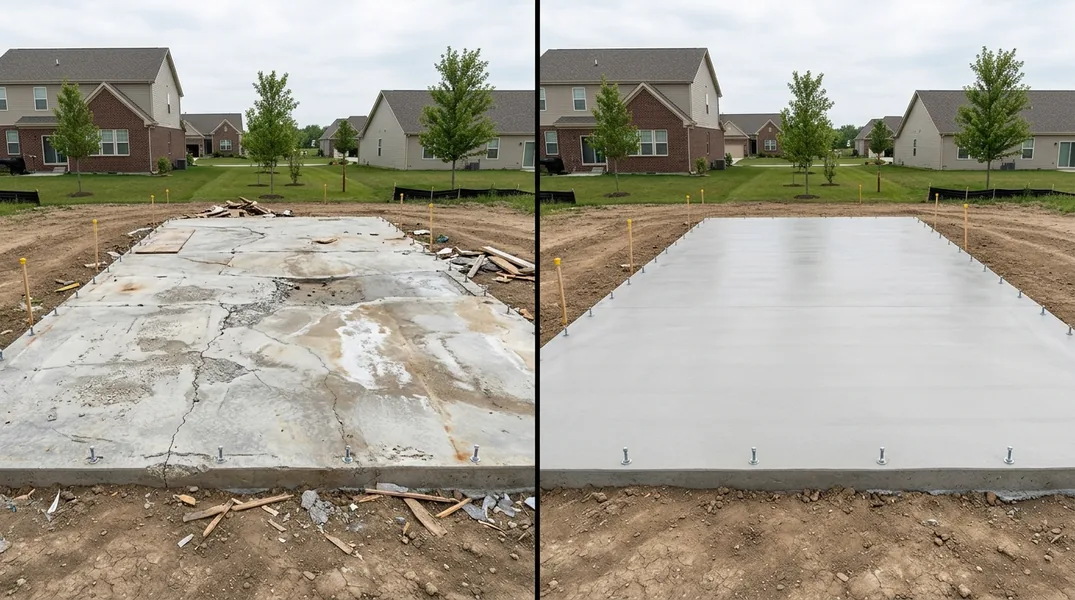
Even in new construction, concrete slab problems can occur due to poor installation practices, inadequate base preparation, or environmental factors. One of the most common issues is spalling, where the surface of the concrete flakes or chips away. This typically results from freeze-thaw cycles, salt exposure, or improper finishing. Look for areas where the surface is rough, pitted, or missing small chunks. Another frequent problem is efflorescence, the white, chalky residue that appears on concrete surfaces. While efflorescence is not necessarily a structural problem, it indicates moisture is moving through the slab, which can eventually lead to more serious issues if not addressed.
Settling and uneven slabs are also concerning. If one section of your garage slab is noticeably higher or lower than adjacent areas, this suggests improper base preparation or subgrade issues. Over time, this unevenness can worsen and create tripping hazards or cause damage to vehicle suspensions. Finally, watch for cracks that form in patterns, such as map cracking (many small cracks forming a web-like pattern) or large diagonal cracks. These often indicate problems with the concrete mix, rapid drying, or structural movement. If you notice any of these issues during your pre-closing walkthrough, document them with photos and contact your builder immediately to discuss remediation options before you take ownership.
When to Call a Professional Concrete Inspector Near Me
While homeowners can conduct a visual inspection themselves, hiring a professional concrete inspector before closing on a new construction home is a wise investment. A qualified inspector can identify issues that aren't immediately obvious to the untrained eye, such as improper slope, inadequate reinforcement, or subgrade problems that may not manifest until months or years after you move in. In Elgin, several professional inspection services specialize in new construction evaluations and can provide detailed reports that you can present to your builder if issues are found.
If your inspector identifies problems or if you're simply concerned about the condition of your slab after closing, Elgin Concrete can help. Whether your new construction slab needs evaluation, minor repairs, or you're interested in protective treatments like sealing, our team has the expertise to assess your situation and recommend solutions. We offer free estimates for homeowners in Elgin who want professional guidance on their concrete surfaces. You can reach us at (224) 268-1462 to discuss your new home's concrete slab or to schedule an evaluation.
Protecting Your Investment: Slab Maintenance After Closing
Once you've closed on your new construction home and thoroughly inspected the concrete slab, the next step is proper maintenance. Even a perfectly installed slab requires care to maintain its appearance and structural integrity. Seal your garage slab within the first year to protect it from moisture, salt, and UV damage. A quality concrete sealer acts as a barrier, significantly extending the life of your slab and making it easier to clean. During winter months in Illinois, be cautious with salt-based ice melt products. While they're effective at preventing slipping, they accelerate concrete deterioration. Consider using calcium chloride or other gentler alternatives, and rinse your slab regularly to remove salt residue.
Keep your slab clean and dry. Sweep regularly to remove debris, and address any spills or stains promptly. If you notice cracks developing after you've moved in, don't ignore them. Small cracks are easier and less expensive to repair than large ones. Concrete Repair & Resurfacing services can address minor cracks, spalling, and other damage before they become major problems. By staying proactive with maintenance and addressing issues early, you'll protect your investment and ensure your new home's concrete surfaces remain safe and attractive for years to come. If you need professional advice or services for your new construction slab, contact Elgin Concrete at (224) 268-1462 for a free estimate.
Looking for a professional concrete contractor in Elgin? Elgin Concrete responds fast for all your concrete needs.
Get a Free QuoteOur services: Concrete Driveways · Concrete Patios · Stamped & Decorative Concrete